
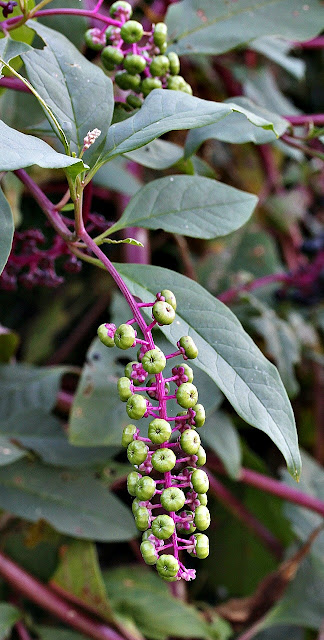
Pokeweed. The berries are toxic to humans but harmless to raccoons, opossums, foxes, and songbirds. So, I did a little research. Pokeweed grows in edges, along fence rows or where gardens meet concrete. The taproots are thick as a child’s wrist, stabilizing the soil and drinking up toxins. These roots did what I couldn’t, drilling through the hardpan.
Scientists are looking into pokeweed’s role in bioremediation. Yes, it’s toxic to humans and some mammals. But the berries feed possums, foxes, and raccoons, not to mention my cardinals and at least seventeen types of migrating birds. These critters aid in seed dispersal. And one day, this odd-looking weed might play a role in cleaning contaminated land.
For a while, I’d suspected my wildflower patch wasn’t a healthy place. Amending helped a little. Yet I couldn’t grow sunflowers, roses, or lavender. Really, I’d tried. Seeds would sprout, but it took hundreds.
And now a wild plant had appeared without my permission. A plant that’s known to appear in troubled places. I could almost hear it telling me to relax: “Shhh, woman. Let me be. I heal disturbed soil.”




Leave a Reply
You must be logged in to post a comment.