
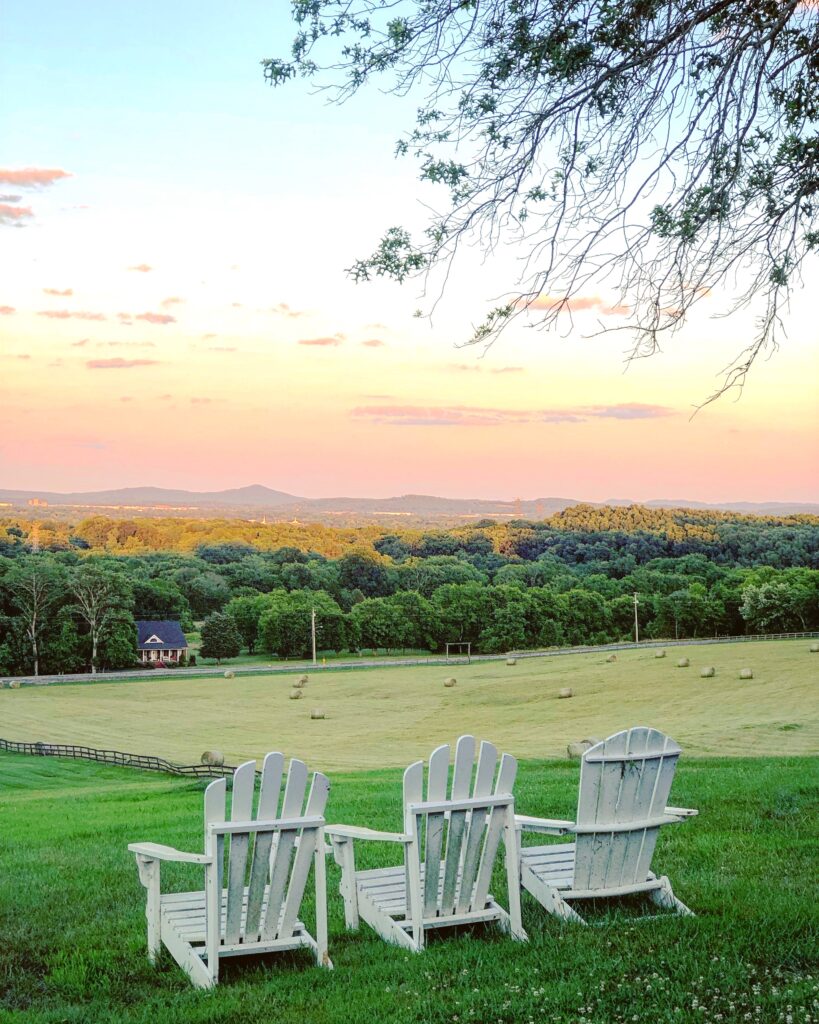
To build a lush forest in a glade takes a geological mercy. And time. Lots of time. The valley was once a layered green habitat, filled with oaks, hickories, and cedars. We’re looking at trees that were at least 120 years old, but the limestone dates back 470 million years to the Middle Ordovician Period.
The stone ledge was hidden year-round by the canopy. Until the trees came down, they’d thrived in a glade-adjacent woodland. Here, the earth was once a sea floor. These ecosystems are ancient: the Tennessee coneflowers (Echinacea Tennesseensis) grew wild—and these glade specialists are only native to my county and two others in the world. Once, they nearly went extinct. To me, this ecosystem is astonishing. Their story is one of vanishing and returning.
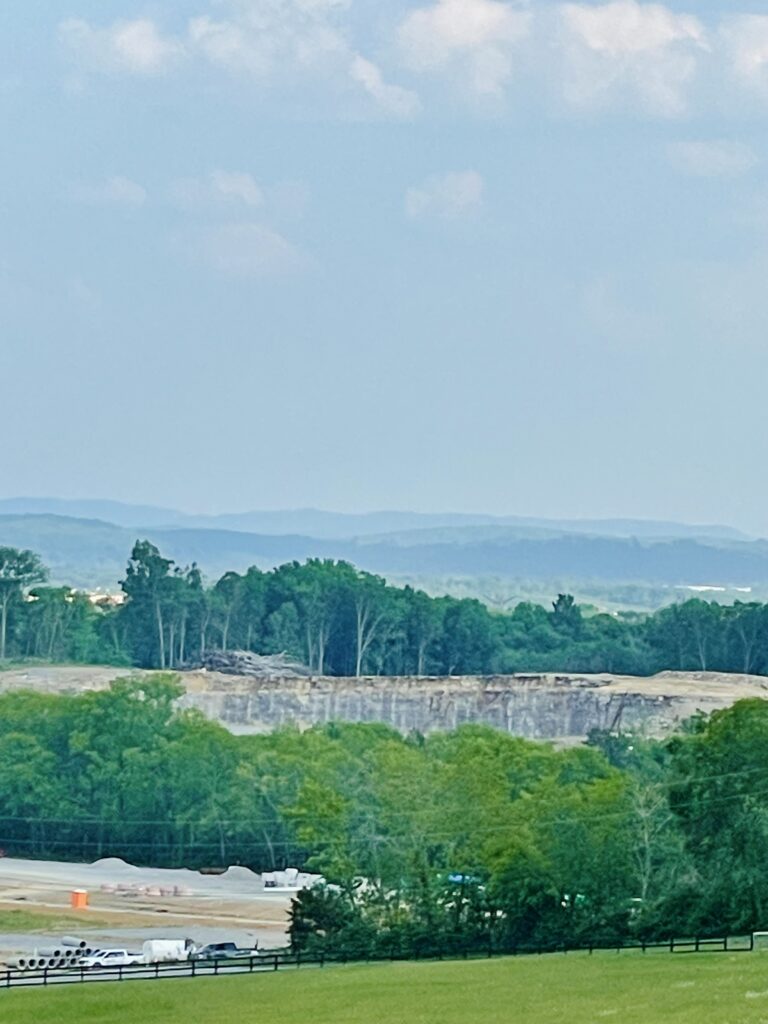
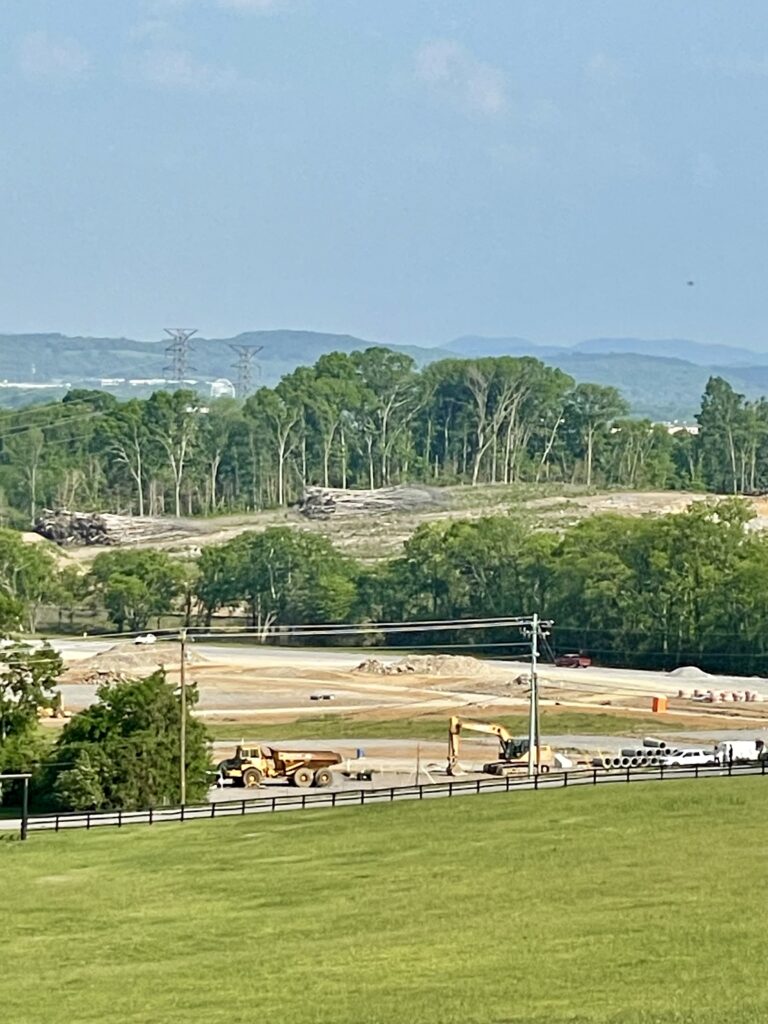
It’s 5:58 PM. The beeping and grinding machines are part of a heavy metal band. But no dynamite. Well, so far.
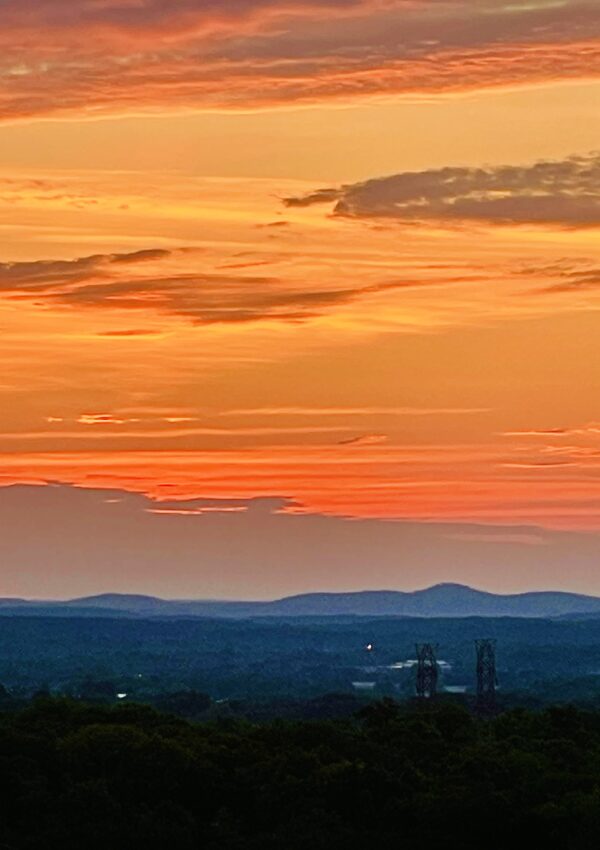
Just now, as the planet shifts toward evening, I hear an owl. Maybe it is the same bird who got into my house and I set him free (I just opened a door). The wild things are caught up in a real-life Watership Down. But they can abide here with me. Grace has arrived, too, teaching me what really matters. I’ve got wild blackberry bushes and fresh water. I’ve got crushed eggshells (baked) for calcium., too, for birds that are still feeling broody.
The sun grazes over the limestone, reminding me every day about the power of staying.


Leave a Reply
You must be logged in to post a comment.